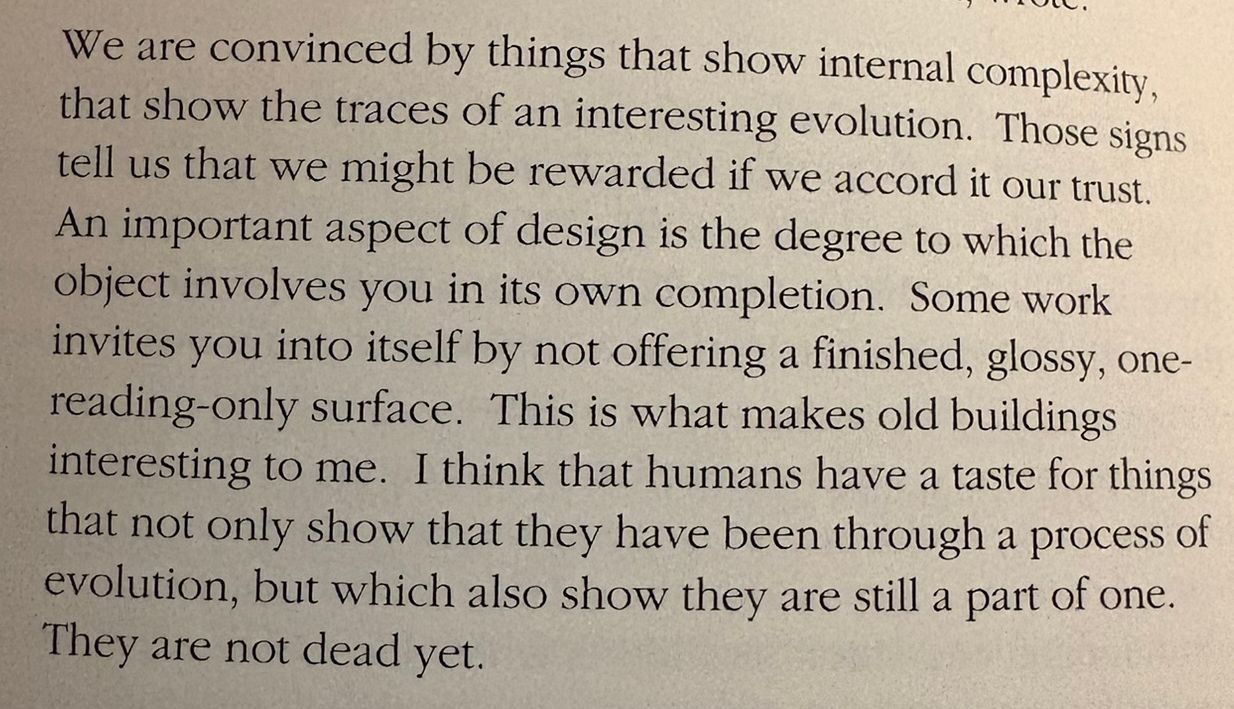
I'm loving some of the descriptions of internal complexity in How Buildings Learn, like this one from Brian Eno:
That complexity builds out of shearing layers. It's a result of different timescales at work.
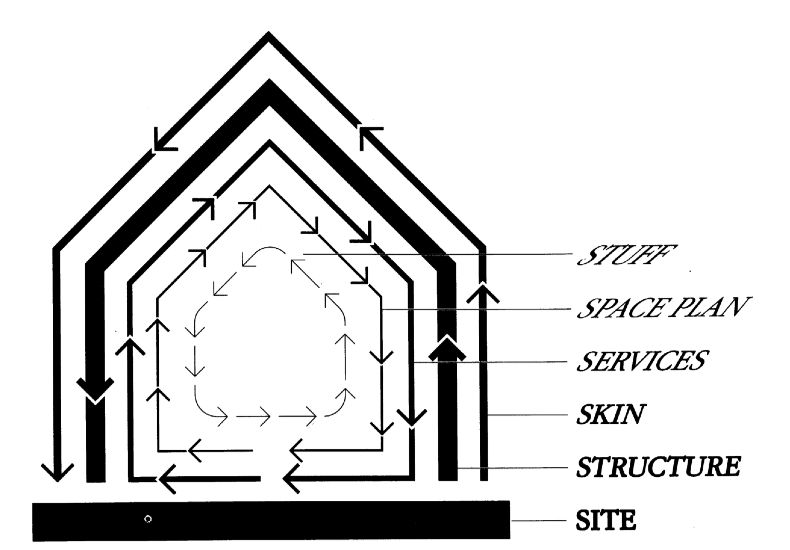 Shearing layers in a building
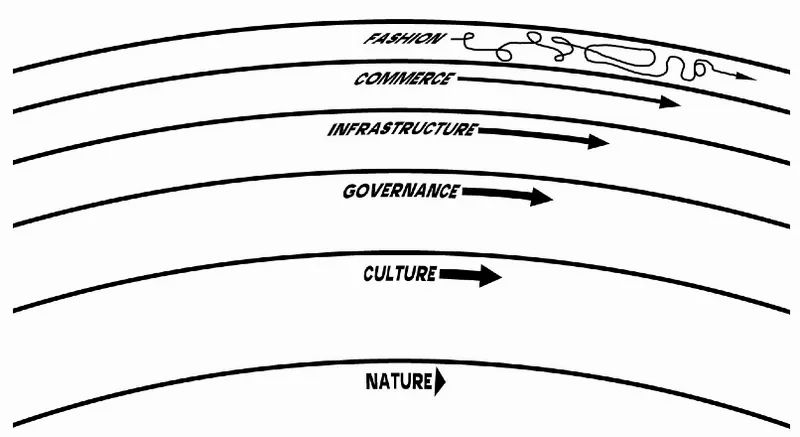 Civilizational shearing layers
So partly it's about the moves you make within constraints. But it's actually a gradient of constraints. If you really want to move the wall in a building, you can, but it may be more or less difficult depending on the wall and the building. Maybe instead of moving the wall you'd like to move you make your pantry shelves in an area a little separated from the kitchen. Maybe you find some other small opportunity within that process that provides more character (a place to display all your novelty mugs... or something).
What the Eno quote gets at is that going into someone else's space, you can recover some of those decisions and responses. You can reconstruct the story of the space. And as you're doing that, you're extrapolating and remembering your own experiences.
And part of it has to also be that you're recognizing patterns of evolution from nature. where you have different organisms growing at different speeds and responding to each other in these complex feedback loops.
So the object you're looking at is not just the object. It's also to different degrees a story of its evolution. And it's interesting to try and figure out how we recognize that story, what recognizing that story does for us.
Of course, with all this, I'm thinking about software and AI. I think Eno's description of internal complexity can be a description of what's missing in generated media or programs. I don't think that's the end of the story though. I think there's probably routes where we can use the technology and build back in different kinds of productive constraints. To be written about another day.